Well Pump Repair in Saratoga County, NY
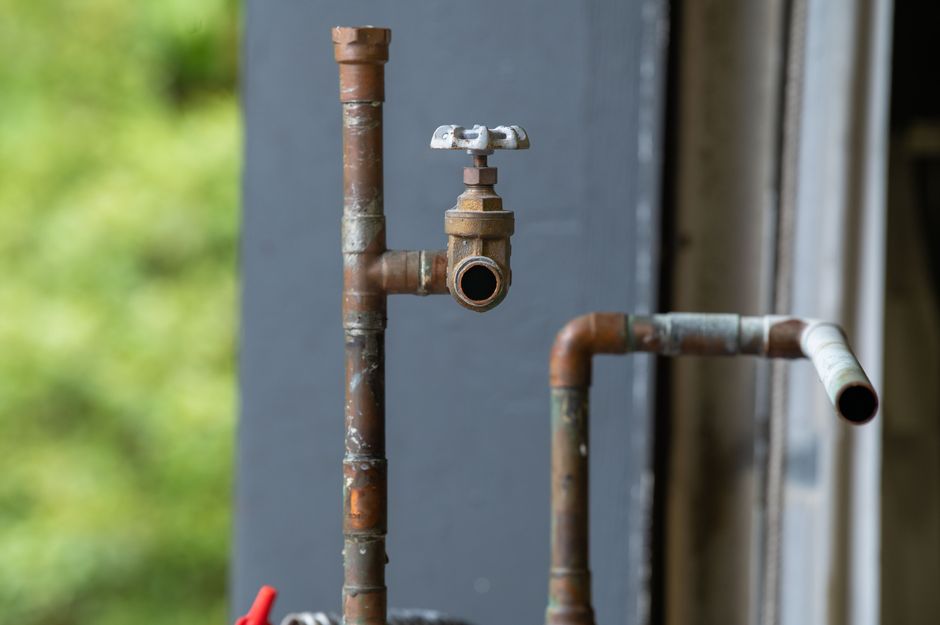
When a well pump starts failing, the signs aren't always obvious. Sometimes it's dramatic — the water stops entirely, mid-shower. More often it's gradual: pressure that's a little weaker than it used to be, a pump that clicks on and off more than it should, a breaker that trips for no clear reason. Because a private well system has several parts that can each fail on their own — the pump itself, the pressure tank, the switch that controls it, the wiring, the line running to the house — the same symptom can point to more than one cause, and guessing wrong means paying for the wrong fix.
Saratoga Well Pump Repair connects Saratoga County homeowners with pump repair service, starting with understanding what your system is actually doing before anything gets scheduled. Call or send a quote request with a description of the problem — what you're seeing, when it started, and what (if anything) has changed recently — and that gets used to route your request to the right kind of service. Call (518) 832-5659 or request a quote to get started.
How to tell if it's really the pump
A handful of homeowner-safe checks can narrow things down before you request service:
- Check the breaker first. A tripped breaker with no other symptoms sometimes means a simple electrical nuisance trip; a breaker that trips repeatedly, especially right after you reset it, points toward a pump or wiring problem that needs a real diagnosis.
- Listen to what the pump is doing. A pump that's silent when it should be running, one that cycles on and off far more often than normal, or one that hums, clicks, or grinds without water flowing are all different signals — see the section below on what each sound usually means.
- Look at your pressure gauge, if your system has one. A reading that's noticeably below what's normal for your system, or one that's dropping over time rather than holding steady, suggests something upstream of the tank.
- Rule out a power issue. If a recent outage or a breaker panel change lines up with when the problem started, that's worth mentioning when you request service — it changes what's likely going on.
None of this replaces an actual diagnosis, but it helps you describe the problem accurately, which gets your request routed faster.
Why did my well pump suddenly stop working?
A pump that goes from working normally to producing no water at all, with no gradual warning, usually points to one of a few things: the pump itself failed outright, the pressure switch stopped signaling the pump to run, a wire connection failed, or the pump lost power for a reason unrelated to the pump — a tripped breaker, a blown fuse, or a broader outage. Because "no water" can trace back to several different parts of the system, our no-water and low-pressure troubleshooting guide walks through what to check first, and our no-water checklist covers the same ground in more depth.
Why does my pump keep cycling on and off?
Short-cycling — the pump kicking on and off rapidly, sometimes every few seconds — is one of the more common complaints, and it's rarely a sign the pump itself is the problem on its own. The most frequent cause is a waterlogged or failing pressure tank that's no longer holding its air charge, which means the tank can't buffer pressure the way it's supposed to and the pump ends up doing all the work. A failing pressure switch, a pump sized wrong for the system, or a leak somewhere in the line can all produce the same symptom. See pressure tanks and pressure switches for the two most common culprits, and our short-cycling article for the full breakdown.
Humming, clicking, or grinding noises
A pump that hums without producing water flow often means it's not priming correctly or is struggling against something restricting flow. Clicking, especially rapid clicking, is frequently the pressure switch cycling rapidly rather than the pump itself — see the short-cycling explanation above. Grinding or a rough mechanical sound is one of the more serious signs, often pointing to a failing motor or bearing, and it's a symptom that generally doesn't resolve on its own.
What does well pump repair typically cost?
There's no reliable flat number to give here, because cost depends heavily on what's actually wrong, how deep the well is, whether the pump needs to be pulled, and which parts need replacing. What tends to drive cost up: pump depth (deeper wells mean more line and more labor to pull and reset a pump), whether the failure is isolated to one component (a switch or a short section of wire) versus the pump itself, and access difficulty. What tends to keep it down: catching a problem early, when it's a tank or switch issue rather than the pump, and when the well casing is easily accessible. The most reliable way to know what you're looking at is getting an actual diagnosis rather than guessing from a symptom list.
Can a pump be repaired, or does it always need replacement?
It depends on what's actually failed. A pressure switch, a control box, or a section of wiring can often be repaired or replaced without touching the pump itself. A pump with a genuinely failed motor, on the other hand, is typically not something that gets repaired in place — at that point, replacement is usually the more sensible path, both in terms of cost and reliability going forward. Our well pump replacement page covers that decision in more detail, and our repair-vs-replace article walks through the lifespan factors that typically tip the decision one way or the other.
What causes a pump to keep tripping the breaker?
A pump that trips its breaker repeatedly is usually telling you something specific: the motor is drawing more current than it should, which often means it's failing internally, or there's a wiring fault somewhere in the circuit. Either way, this isn't something to keep resetting and ignoring — a motor that's overheating or a fault in the wiring is a problem that gets worse, not better, the longer it runs like that.
Is it safe to keep using a pump that's losing pressure?
A pump that's losing pressure gradually will typically keep running until it fails outright, which means you can often keep using water in the meantime — but a pump running under stress (low pressure, frequent cycling, or an already-tripping breaker) is more likely to fail suddenly and at a less convenient time. It's also worth knowing that continuing to run a struggling pump doesn't fix the underlying cause, and in some cases (like a motor running hot) it can shorten what life the pump has left. If your pressure has dropped noticeably, it's worth requesting service before it becomes a full stoppage.
Pump problem vs. tank or switch problem
Because a pump, a pressure tank, and a pressure switch all work together, it's easy to blame the wrong one. A rough rule of thumb: if pressure drops gradually and evenly, or the pump seems to run constantly at lower output, that leans toward the pump. If pressure swings noticeably or the pump short-cycles rapidly, that leans toward the tank or the switch. It's not a perfect diagnostic on its own, which is exactly why an actual look at the system matters — see pressure tanks and pressure switches for what each part actually does.
Submersible or jet pump — does it matter for repair?
Most newer wells across Saratoga County use submersible pumps, set down inside the well casing, while some older systems use jet pumps mounted above ground. The two fail differently and get diagnosed differently — see our submersible and jet pump page for how to tell which type your system has and why it matters for repair.
What happens when you request service
Call or send a quote request describing what your system is doing — no water, low pressure, a noise, a tripping breaker — along with your town and any timing that matters. That description gets used to route your request appropriately, rather than dispatching blind. From there, service gets scheduled to take an actual look at the system, diagnose which component is actually failing, and address it.
A note on hiring anyone for well pump work in New York
New York requires businesses performing well pump work to register annually with the DEC. Before hiring anyone for pump repair, replacement, or related work, homeowners can use the DEC's Water Well Contractor Search Tool to confirm a contractor's registration — a step worth taking regardless of who you end up calling. Our DEC registration article covers what the requirement involves and what to verify.
If you're buying a home on a private well
Diagnosing an existing pump problem is a different situation from evaluating a well system you're about to buy into. If you're in the middle of a home purchase, see our guide to buying a home on a private well in Saratoga County and our real estate well inspection service for what a point-of-sale evaluation covers.
Related service pages
Well pump problems often overlap with related parts of the system: well pump replacement, submersible and jet pumps, pressure tanks, pressure switches, no-water and low-pressure troubleshooting, and winter freeze-ups. For related work, see well drilling, water treatment and filtration, sump pumps, well shocking and disinfection, and real estate well inspections.
Related reading
Dealing with a well pump problem? Call (518) 832-5659 or get a quote.