Submersible & Jet Pump Service in Saratoga County, NY
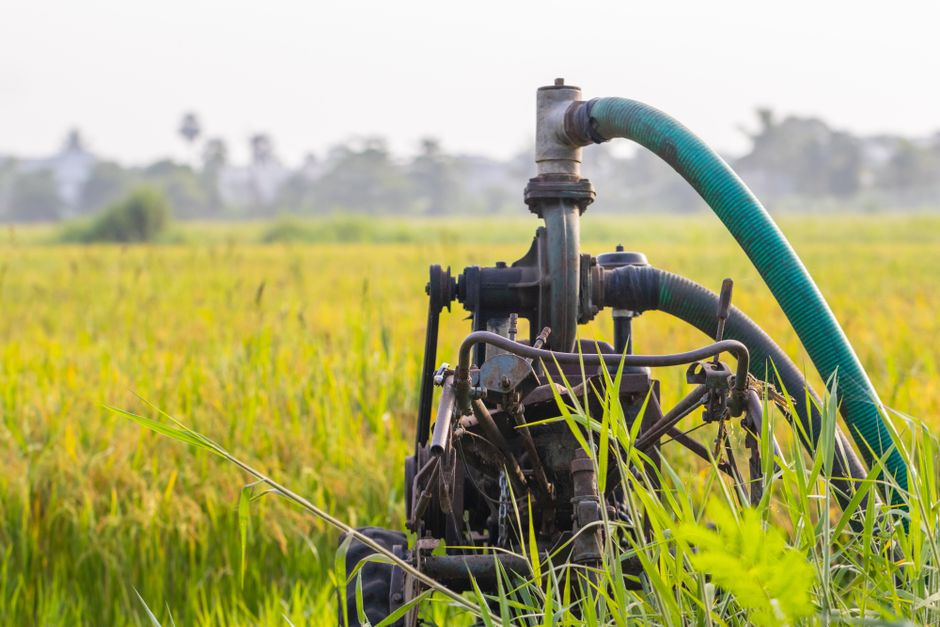
Saratoga County homes on private wells run one of two basic pump types — submersible or jet — and knowing which one you have changes how a problem gets diagnosed and what service looks like. The two work on different principles, fail in different ways, and (for older systems) aren't always a simple swap from one to the other.
Saratoga Well Pump Repair connects homeowners with service for both types, starting with figuring out which one your system actually has. If you're troubleshooting a symptom rather than trying to identify your pump type, see our well pump repair page first. Call (518) 832-5659 or request a quote to get started.
What's the difference between a submersible and a jet pump?
A submersible pump is sealed and sits down inside the well casing, below the water line, pushing water up to the house from underwater. A jet pump sits above ground — typically in a basement, well house, or pit — and pulls water up using suction generated at the surface. Submersible pumps are generally quieter (there's no above-ground motor noise) and tend to be the standard choice for deeper wells, while jet pumps are more common on shallower wells or older systems where the pump was never converted.
Which type does my well have, and how can I tell?
If you can locate a pump motor above ground — in a basement, a pump house, or a pit near the well — you almost certainly have a jet pump. If there's no visible motor anywhere and the only above-ground fixture is the well cap itself with wiring and piping running down into it, you have a submersible pump. If you're not sure, a look at the system can confirm it quickly, since the visual difference is usually obvious once you know what to look for.
Why do most newer Saratoga County wells use submersible pumps?
Submersible pumps have become the standard for new residential well construction across most of the county, for reasons that generally hold true regionally: they don't lose prime the way jet pumps can, they run quieter since there's no above-ground motor, and they tend to handle deeper wells more efficiently than a jet pump working against the same depth. Older homes, particularly in the county's original village and city centers, are more likely to still have an older jet pump system that was never upgraded. See our older vs. newer construction guide for more on how well setups differ by home age.
Can a jet pump be converted to submersible?
In many cases, yes — but it's not a small swap. Converting from a jet pump to a submersible system generally means running new wiring and drop pipe down into the well casing and removing the above-ground jet pump setup entirely, which is a more involved job than a straightforward pump replacement. Whether it makes sense for a given property depends on the well's condition and how the casing was originally set up — worth discussing when you request service rather than assuming either way.
How deep can a submersible pump go, and how deep are typical local wells?
Submersible pumps are built to handle considerably greater depths than jet pumps can manage, which is part of why they've become the default for deeper wells. Well depth itself varies across Saratoga County depending on local geology — generally shallower in areas with glacial till and sand-plain deposits, and often deeper where wells are drilled into bedrock toward the county's western and Adirondack-foothill towns. See our geology guide for how depth and well type tend to track with location across the county.
Diagnosing each type differently
Because submersible and jet pumps fail in different ways, getting the diagnosis right starts with knowing which one you have. A submersible pump that's failing tends to show up as reduced output, complete loss of water, or a motor that trips the breaker — since the pump itself is out of sight, troubleshooting usually relies on pressure readings and electrical checks rather than a visual inspection. A jet pump, being above ground, is easier to inspect directly: a jet pump that's lost its prime, is making unusual noise, or has a visibly leaking fitting can often be identified just by looking at the unit itself. Neither type is inherently more failure-prone than the other — they simply fail differently, and knowing which one you're dealing with changes what gets checked first.
Noise and efficiency differences
Homeowners switching from an older jet pump system to submersible often notice the difference in noise right away — a jet pump's above-ground motor is audible from inside the house, especially in a basement or utility room near living space, while a submersible pump's motor is sealed underwater and largely silent from the house. Submersible systems also tend to be more energy-efficient at depth, since a jet pump has to work harder to pull water up from farther down, while a submersible pump pushes water from below and doesn't fight gravity the same way.
What happens when you request service
Call or send a quote request describing your system — whether you know if it's submersible or jet, what symptoms you're seeing, and your town. If you're not sure which type you have, that's fine to say; it gets sorted out as part of understanding your system rather than something you need to diagnose yourself first. From there, service gets scheduled around the specific pump type and what it needs.
Related reading
Not sure which pump type you have? Call (518) 832-5659 or get a quote.